Coconut Shell vs. Coal vs. Wood-Based Activated Carbon: What's the Difference?
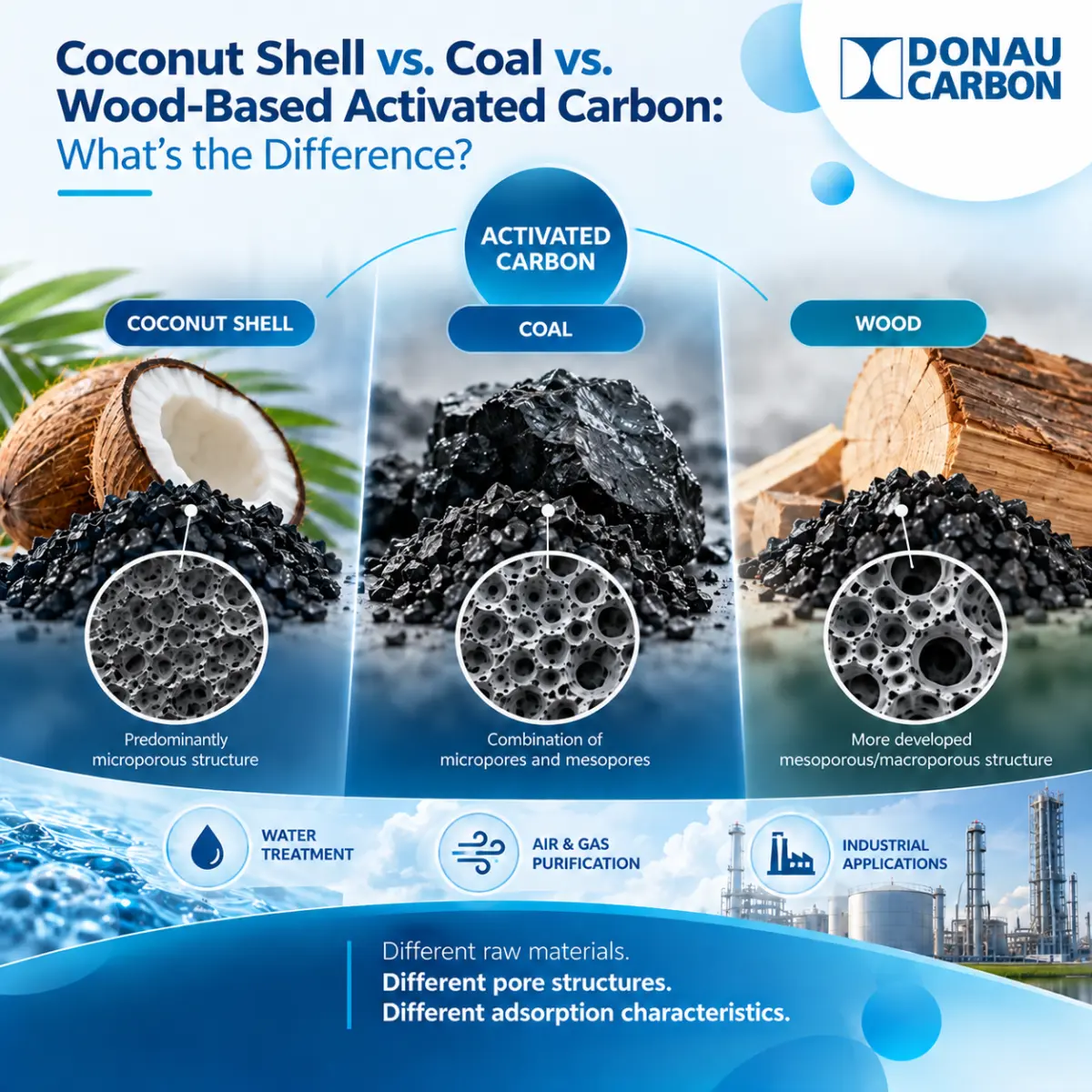
Activated carbon is available in different grades and can be produced from several carbonaceous raw materials. Among the most widely used are coconut shell, coal and wood. While all three can produce activated carbon with adsorption properties, their pore structures and characteristics can differ significantly.
Choosing the right activated carbon is not simply a matter of choosing a raw material. The appropriate carbon depends on the substances to be adsorbed, the characteristics of the process, the operating conditions and the required performance.
Coconut shell, coal and wood-based activated carbons are different because the characteristics of their starting materials and activation processes influence the pore structure of the finished product.
Understanding these differences can help engineers and process operators make a more informed selection for water, air, gas and industrial purification applications.
Coconut Shell
Coconut shell is a biomass-based raw material that can be converted into activated carbon through controlled carbonisation and activation.
Coal
Coal-based activated carbon is produced from selected coal grades and processed to develop a pore structure suitable for specific adsorption requirements.
Wood
Wood-based activated carbon is produced from suitable wood-derived raw materials. Its pore structure can be particularly useful for adsorption of larger molecules.
Why Does Pore Structure Matter?
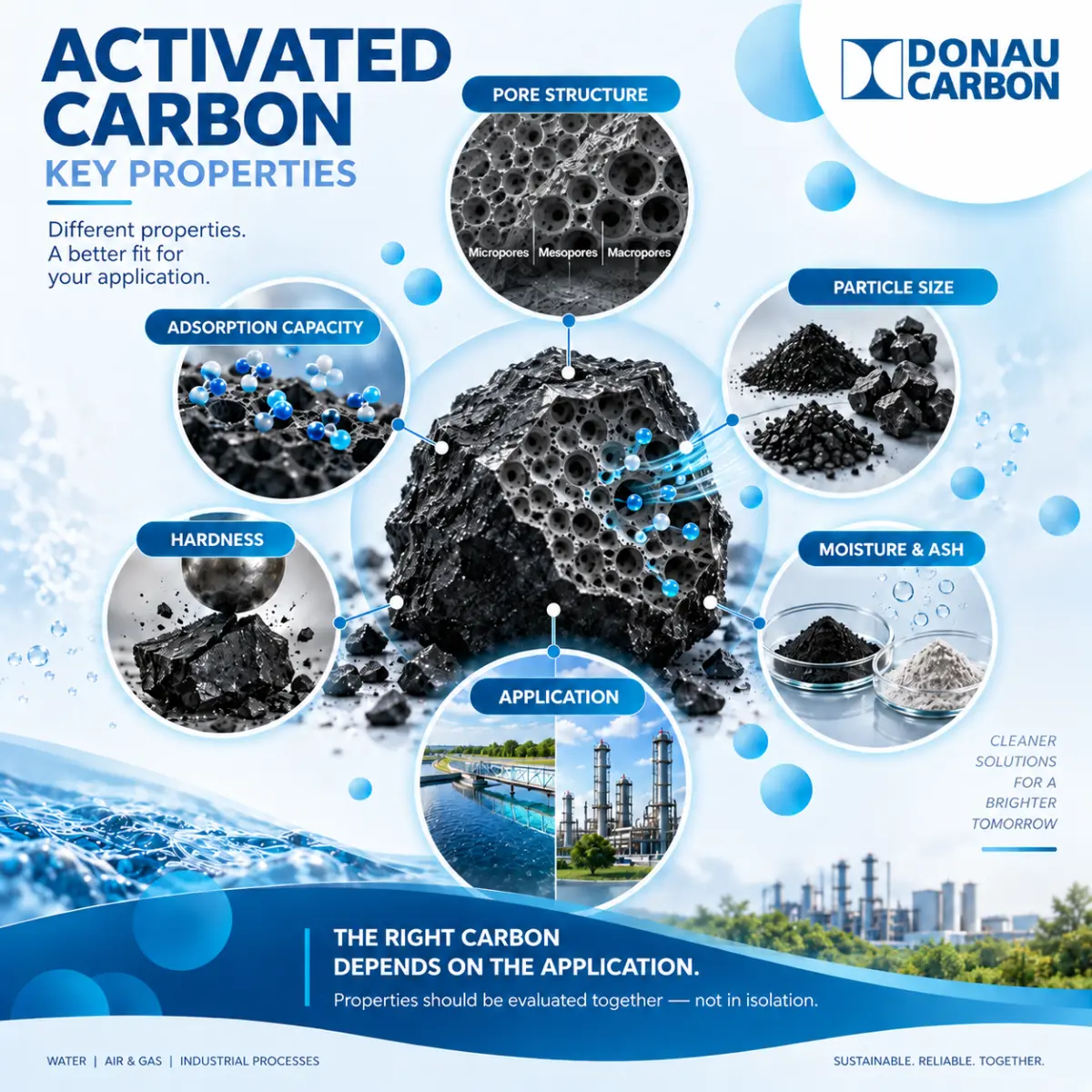
The most important characteristic distinguishing many activated carbon grades is their pore structure. Activation creates a network of pores within the carbon material, increasing its internal surface area.
These pores are commonly discussed in terms of micropores, mesopores and macropores. Different pore sizes can provide different levels of accessibility to molecules of different sizes.
Micropores
Very small pores that contribute significantly to adsorption of smaller molecules.
Mesopores
Intermediate-sized pores that can provide accessibility for larger molecules.
Macropores
Larger pores that can act as pathways supporting transport into the internal pore network.
Coconut Shell vs. Coal vs. Wood
| Characteristic | Coconut Shell | Coal | Wood |
|---|---|---|---|
| Raw Material | Coconut shell biomass | Selected coal grades | Wood-derived raw materials |
| Pore Structure | Often predominantly microporous | Micropores and mesopores can both be significant | Often greater mesoporous/macroporous development |
| Surface Characteristics | High internal surface area can be developed | Broad pore distribution can be engineered | Large accessible pores can be advantageous |
| Typical Application Focus | Water and adsorption applications | Water, gas and industrial applications | Applications involving larger molecules |
| Form Availability | GAC, PAC and other forms | GAC, PAC and pelletised forms | Commonly PAC and other engineered forms |
There Is No Universal “Best” Activated Carbon
Coconut shell, coal and wood-based activated carbons each have their own characteristics. The right choice depends on the adsorption objective and process conditions rather than the raw material alone.
Important selection parameters can include pore structure, particle size, iodine number, molasses number, methylene blue adsorption, ash content, hardness, moisture and other application-specific characteristics.
Water Treatment
Activated carbon can be selected for removing or reducing specific contaminants through adsorption in water treatment processes.
Air & Gas Treatment
Different activated carbon structures can be considered for adsorption-based treatment of gases and air streams.
Industrial Processes
Activated carbon grades can be selected according to process requirements, target substances and operating conditions.
Different Raw Materials Create Different Activated Carbon Characteristics
Coconut shell, coal and wood can all be converted into activated carbon, but their inherent properties and processing conditions influence the pore structure and adsorption behaviour of the resulting product. Therefore, selecting activated carbon should always start with understanding the application and the adsorption requirement.
Selecting the Right Carbon Starts With the Right Understanding
Coconut shell, coal and wood-based activated carbons are not simply three versions of the same material. Their raw-material characteristics and activation processes can result in different pore structures and adsorption characteristics.
Coconut shell activated carbon is often associated with a predominantly microporous structure, while coal-based activated carbon can provide a broader distribution of micropores and mesopores. Wood-based activated carbon can offer greater development of larger pores, making it useful for applications involving larger molecules.
The best activated carbon is therefore the one whose characteristics match the specific application, operating conditions and adsorption objective.
Need Help Selecting the Right Activated Carbon?
Activated carbon selection depends on the application, target substances and operating conditions. Donau Carbon provides application-oriented technical support for activated carbon solutions.
Talk to Our Team